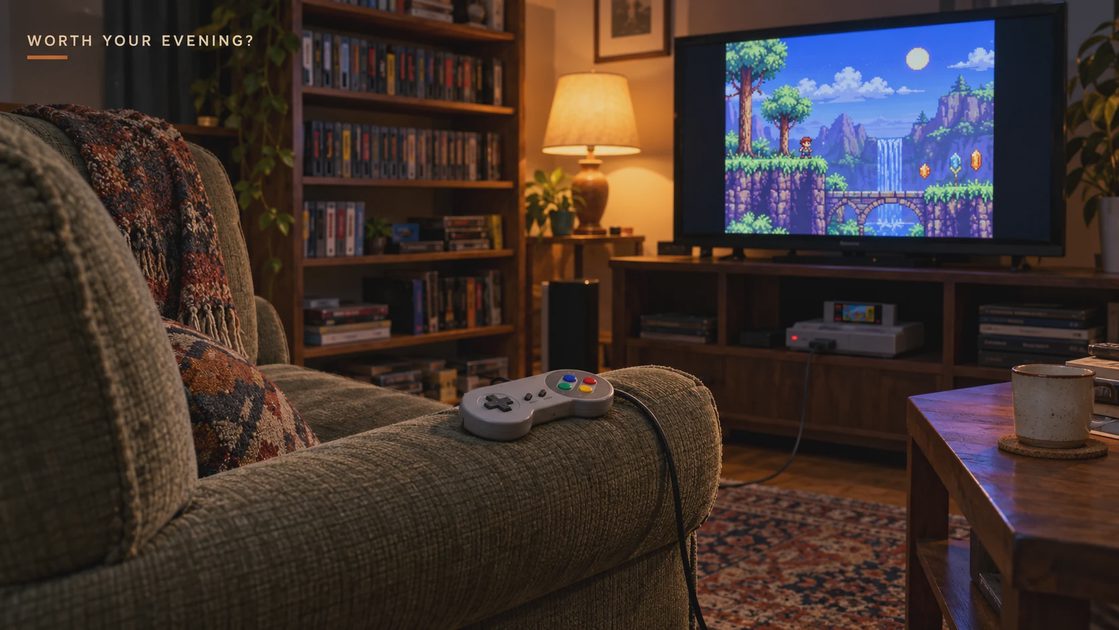
Rigsby Replays exists to help you decide which classic games deserve your limited free time. I judge them by how they play today, with the version, controls, difficulty, and time commitment made clear. The memory gets a vote. It doesn't get the final word.
I love replaying classic games. I also know how easily that affection can become an obligation: to finish something because it mattered once, to buy something because I missed it, or to defend a frustrating evening because the box says Nintendo.
This is a place for enjoying those games with fewer obligations attached. If you have a couple of free evenings, I want to help you spend them well.
The game I owned for five minutes
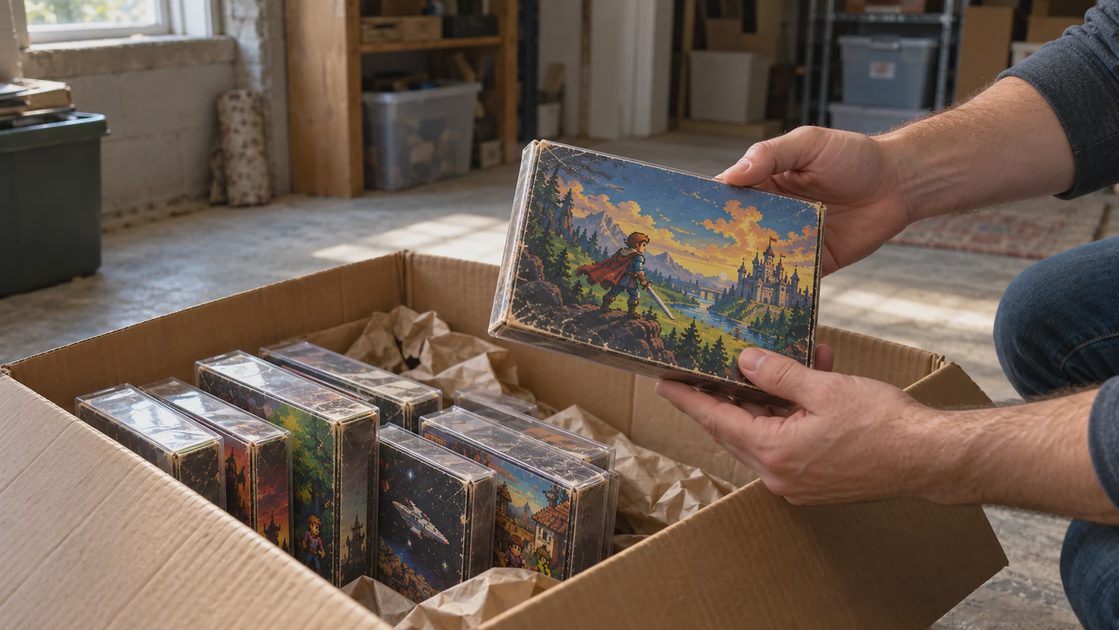
In the summer of 2022, while packing our basement for a move, I found myself looking at more than 200 boxed games. They had been arranged carefully. Their protective plastic sleeves had collected dust just as carefully.
One was my big-box copy of EarthBound. I had paid $250 for it on eBay, an amount that had taken some saving and some explaining to myself. I picked it up and tried to remember the last time I had actually played that particular copy.
The answer was the evening it arrived. About five minutes, enough to check that it worked. Then it went into the cabinet.
That was an uncomfortable thing to discover while preparing to carry the cabinet into another house. I had made room for the object, protected it, and paid to own it. Finding time to play it had somehow remained a separate project.
I started wondering what I had expected the purchase to bring back. EarthBound? Certainly. But perhaps also an old kind of afternoon: no work waiting, no calendar to consult, and enough time to get lost without worrying about when I would find my way out.
A cartridge could give me access to the game. It could not give me that afternoon.
I eventually sold most of the games I was keeping primarily for display. That decision deserves its own story. What matters here is the question it left me with: when collecting and remembering took up so much space, where had the playing gone?
I don't think everyone with a shelf of boxed games needs to have this revelation. Collecting can be a satisfying hobby in its own right. My mistake was treating ownership as evidence that I was spending time with the games I loved.
Rigsby Replays begins with the playing.
What the memory leaves out
Retro gaming nostalgia is useful information. It tells me that a particular game mattered to someone, sometimes for reasons a review score could never capture.
My memories of Mario Kart 64 include my cousin and an entire summer spent working on shortcuts in Wario Stadium. A modern replay can recover the track, the engine sounds, and the nervous approach to a jump. It cannot put that summer back around the screen.
That doesn't make the memory false. It means I need to know which part of the pleasure came from the software and which part came from the room.
The same distinction matters when I recommend something to you. You may have never played it. You may have loved it on a different system. You may be returning alone to a game you remember playing with three other people, none of whom now has the same evening free.
If I describe the game entirely through my childhood, I haven't given you much help with yours.
I want classic game reviews to make that distinction visible. How quickly does the action become enjoyable? What takes practice? Does losing teach you something useful, or mainly ask you to repeat a stretch you already understand? What would a newcomer need explained that familiarity has made invisible to me?
Those questions can lead to a generous review. They can also lead to a qualified one. I don't want skepticism to become another costume, with every beloved game dragged into court so I can announce that everyone else remembers it incorrectly.
Sometimes a great jump still feels like a great jump. I would rather explain why it works than invent a complaint to look independent.
History and a Tuesday evening ask different questions
In my digital media classroom, I can discuss the original Legend of Zelda as an important example of exploration and player discovery. That conversation gives a design room to be understood in the context of its time.
At home, after work, I have another decision to make. How much uncertainty do I want tonight? Do I want to map, experiment, and accept a slow stretch before anything clicks? Or do I want a game that gives me something satisfying before I need to stop?
Neither answer changes Zelda's importance. They change whether I would recommend that particular evening with it.
That's how I approach the question, "Are retro games still worth playing?" I need to know which game, which version, and what you want from the session. A historic breakthrough can remain fascinating while asking for more patience than you have available. A modest game can fit your evening beautifully without having transformed the industry.
I want to explain both kinds of value without pretending they are interchangeable.
It also means I will sometimes recommend understanding a game before committing to finishing it. Looking closely at an early idea, trying a representative section, or reading about a design decision can be worthwhile. Respect doesn't require a completed save file.
You don't have to dislike the games I find difficult to recommend. My job is to make the recommendation clear enough that you can recognize when my reasons don't apply to you.
The conditions belong in the review
A game reaches your hands through a particular setup. If I leave that setup out, I can mistake a problem with the arrangement for a problem with the design, or credit the original game for a convenience added decades later.
For relevant replays, I want you to know:
The version and platform. An original release, a later port, and a collection can offer different experiences under the same title.
The display and controller. I should identify what I used, especially when the recommendation depends on how the picture looks or the controls respond.
The difficulty and assists. Rewind, save states, and other help change the terms of a session. I'll say when they are part of mine.
The amount and scope of play. Revisiting an opening, finishing a campaign, and comparing several versions support different conclusions.
Those details are there to help you interpret the judgment. They aren't a checklist of expensive equipment you must buy before you're allowed to have an opinion.
I enjoy original hardware. I also use modern collections when they make more sense. For modern retro gaming, my preference is the setup that lets the strengths of the game come through at a cost in money, space, and effort I can live with.
A CRT can be interesting because of what it contributes to the image and the experience. It doesn't make its owner a better player. A handheld can be the sensible choice because it fits into an evening. It still needs comfortable controls and a screen that works for the game.
If a particular adapter, controller, or setting matters, I want to explain the problem it solves before recommending it. "More authentic" is incomplete advice when the reader doesn't know what the difference will feel like.
And if I haven't tested a version or measured a delay, I won't present a number as though I have. A noticeable hesitation is an observation. Identifying its cause is another piece of work.
Three verdicts, with room for your circumstances
I use three broad verdicts to keep historical appreciation from swallowing the practical recommendation.
Verdict | What I mean | What you should look for in the review |
|---|---|---|
Worth Revisiting | I can recommend spending time with the game today, under the conditions described. | What still works, the friction to expect, and the version or approach behind the recommendation. |
Worth Understanding | The game offers something important or revealing, but I have reservations about recommending an ordinary playthrough. | What deserves attention and what makes a longer commitment harder to recommend. |
Leave It in the Archive | I don't find enough present-day enjoyment to recommend the replay for the reader and circumstances discussed. | The specific reasons, including whether a different version or preference could change the judgment. |
These are recommendations, not permanent sentences. If your pleasure comes from mastering an unforgiving scoring system, an evening I find too demanding may be exactly what you wanted.
The useful part of a verdict is the explanation underneath it. "Worth Revisiting" shouldn't conceal hours of setup. "Worth Understanding" shouldn't be a polite way to avoid saying what I disliked. And leaving something in the archive doesn't require treating everyone who loves it as mistaken.
I would rather give you a qualified answer you can use than a dramatic one you have to translate.
I care about what happens when you need to stop
Retro gaming for adults often comes down to a practical question: can I stop without losing the part of the evening I just spent?
I have a loose 30-minute rule. Before choosing something on a work night, I want to understand what a short session can reasonably accomplish and how I can leave it. That might mean completing a couple of levels, practicing a difficult section, or making progress in a longer game that I can preserve.
The rule isn't that every game should be short. I want the stopping point to be a choice I understand, rather than a surprise waiting behind the next door.
I am comfortable using help when it makes that possible. Rewind isn't an invention of impatient players: Nintendo even provides it on the Super NES Classic Edition. The important question for a review is how using a feature changes the experience, and whether that change suits the person playing.
There are tradeoffs. Rewinding every missed jump can interrupt a level's rhythm. Practicing a boss with save states can remove the pressure of reaching it on limited lives. For some games, that pressure is part of the attraction; for some evenings, it is the thing I want to set aside.
I won't turn either preference into a character test. I want to describe what you gain, what you give up, and which choice I made.
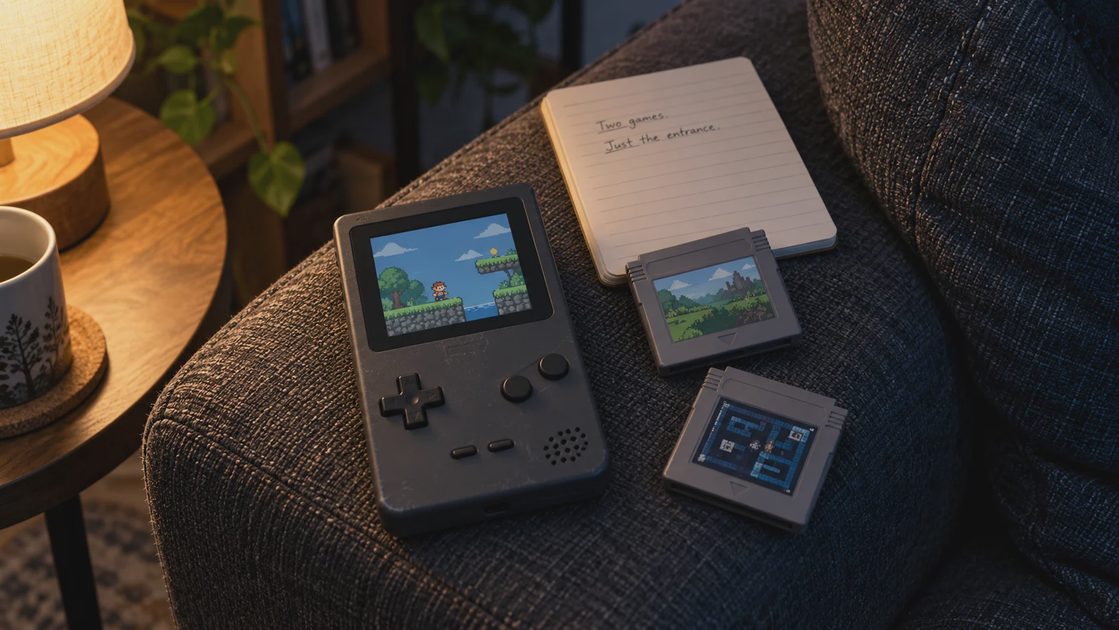
My other useful restriction is keeping only two games in a device's current rotation. I arrived there after spending evenings browsing a large library instead of starting anything. A bigger list was offering me more decisions when I had sat down hoping to make fewer.
Two games isn't a prescription for your library. It's a reminder to myself that the selection screen is only the entrance.
Four ways into the same conversation
The site has four sections because enjoying an old game involves more than deciding whether it was good.
Does It Hold Up? is where I return to individual games and explain how their controls, pacing, challenge, and presentation feel under the conditions of the replay. I want the praise to be specific enough to mean something and the criticism useful enough to act on.
The Replay Conditions handles the practical arrangements: choosing a version, connecting a console, comparing controllers, or deciding whether a collection's conveniences justify its compromises. The point is to get a game into a form you can enjoy, without turning every evening into an equipment project.
Quarter by Quarter gives arcade games their own space. A machine had to attract attention, invite a coin, and offer an experience in a room full of other machines and other people. That setting belongs in the discussion. So do the sounds, the scoring, and the strange combination of competition and cooperation around a cabinet.
Save File Stories is where personal memories can be personal memories. Here I can write about the objects I bought, the people I played with, and the ways my expectations have changed. A story doesn't have to prove that a game is universally excellent to explain why it mattered to me.
The sections will overlap when that helps. A review may need a short account of a control scheme; an essay may reveal why a convenience matters. I want the connection to serve the reader, rather than make you read three other articles before reaching an answer.
Bring the time you actually have
If you grew up with these games, you don't owe them the tastes you had at ten. You can change your mind. You can enjoy the familiar opening and decide that it was enough. You can also find that a game you barely understood then is exactly right for you now.
If you are meeting them for the first time, you don't owe anyone a performance of nostalgia. I want to give you enough context to understand an unfamiliar choice, then let you decide whether the result is enjoyable. Being told that something was impressive in 1991 is background, not a substitute for a reason to keep playing.
I am interested in nostalgia versus gameplay when the distinction helps explain a recommendation. I am equally interested in the moments when they work together: a familiar sound drawing me back to a game whose decisions still hold my attention once the recognition has passed.
That is the kind of evening I want this site to help you find.
Before your next replay, write down one thing you need from it: a reliable stopping point, a satisfying challenge, a game to share, or simply half an hour you will enjoy. Choose the game and setup against that need.
You can leave the rest of the shelf where it is.